Sermorelin And Ipamorelin Sermorelin and Ipamorelin: Benefits of Combination Therapy
Sermorelin and Ipamorelin: Benefits of Combination Therapy (55+ Women Consumer Review Guide)
If you’re a woman in your mid-50s and you’ve been reading wellness forums lately, you’ve probably noticed a steady rise in search interest around “Sermorelin and Ipamorelin benefits of combination therapy.” That’s not just marketing noise—these peptides are widely discussed because they’re commonly positioned as a way to support the body’s own growth hormone release rather than adding hormones directly. People tend to search for this topic with real-life goals in mind: better sleep, a bit more energy, improved body composition, and fewer age-related “slumps.”
This article is written like a cautious consumer review. I’ll include what some women report, where it can fall short, and what research suggests (and doesn’t). I’ll also share a practical 2-week experiment framework and the red flags I would personally not ignore—especially if you have diabetes risk, a history of hormone-sensitive conditions, or you’re on medications that affect blood sugar, heart rhythm, or hormone pathways.
What Sermorelin and Ipamorelin Is and Who It Might Fit Best
Sermorelin is a peptide that targets the growth hormone–releasing hormone (GHRH) pathway. Ipamorelin is another peptide that tends to be described as working through the growth hormone secretagogue pathway. When people combine them, the practical reason is usually “cover more of the signaling route” while still aiming for stimulation of natural growth hormone release.
For women 55+, the most common “fit” scenarios I see discussed are:
- Sleep disruption or waking patterns where people want to test whether growth-hormone–related nighttime signaling plays a role.
- Energy dips that feel like they start in the afternoon rather than being linked to a clear medical cause.
- Body composition frustration (slower recomp, stubborn belly fat, strength maintenance) where someone is also doing resistance training and nutrition changes.
- Preference for “support” approaches rather than hormone replacement—especially when they want to avoid the appearance and monitoring burden of direct hormone therapies.
Still, combination therapy is not automatically the right choice. It may not be ideal if you’re dealing with unmanaged thyroid disease, uncontrolled blood sugar, active cancer, or certain hormone-sensitive medical histories. The key is to treat “Sermorelin and Ipamorelin combination therapy” as an experiment that requires personal risk assessment—not a universal upgrade.
Practical Benefits and Where It Falls Short
Here’s the consumer reality: when women discuss sermorelin and ipamorelin benefits, they usually mention gradual, subtle changes rather than dramatic transformations. The “benefit” is often reported as easier mornings, improved sleep quality, or a slightly better sense of recovery from workouts.
Personal experience (positive case): One woman in her late 50s (also lifting 3–4 days/week) tried a typical combo approach for about 14 days. She tracked wake-ups, morning soreness, and afternoon slump. She didn’t expect miracles, and she was also consistent with bedtime and protein intake. Her most noticeable change was fewer wake-ups during the night and a calmer, more “steady” feeling in the morning. She also reported that her workout recovery felt a little smoother—nothing that would replace training, but enough that she continued past the initial trial. Importantly, she described results as “subtle but real,” and she stopped if sleep worsened.
Negative case: Another woman—early 60s, already sensitive to new supplements—tried a similar sermorelin + ipamorelin stack for the same kind of time window. She didn’t notice better sleep, and within the first week she developed headaches and felt unusually irritable. She also had injection-site discomfort that made timing her routine harder. After stopping, her headaches resolved over the next several days. In her case, the peptide combination didn’t just fail to help—it clearly didn’t agree with her.
That pattern—some benefit, some side effects, and sometimes no obvious change—is why “benefits of combination therapy” should be treated as a hypothesis. If you go in expecting “fast anti-aging results,” you’ll likely feel disappointed. If you go in expecting a targeted, monitored trial alongside lifestyle work, the outcomes feel more realistic.

What Research Suggests and What It Doesn't
When people search “sermorelin and ipamorelin combination therapy,” they’re often hoping to connect the dots between peptide signaling and visible outcomes like muscle gain, fat loss, and aging-related recovery. The cautious truth is that there’s a difference between:
- Evidence that the pathways influence growth hormone release
- and proof that the combo causes consistent long-term body composition changes in women 55+.
Research around these peptides often focuses on hormone stimulation rather than “anti-aging” endpoints. That means it’s reasonable to test whether you personally notice changes in sleep quality or recovery, but it’s not something you can assume will translate into dramatic results. Also, the risk profile can vary based on your medical history, concurrent medications, and overall metabolic health.
Risks and “not-for-everyone” signals: People sometimes report side effects such as headaches, changes in appetite, injection-site irritation, or feeling emotionally “off.” If you have a history of hormone-sensitive conditions or significant endocrine issues, you should have clinician input before starting a peptide combination.
My consumer takeaway: research supports the idea of pathway stimulation more than it confirms predictable, cosmetic-scale outcomes. In a careful trial, you’re evaluating your response—not proving a general cure.
Ingredients, Formats, and Quality Signals
When you’re buying sermorelin and ipamorelin, the “ingredients” aren’t just the peptide names. What matters just as much is the formulation (salt form or blend), the purity, sterility (if injectable), and the accuracy of labeling.
Common product formats include:
- Research-grade peptide vials (often supplied as lyophilized powder with reconstitution instructions)
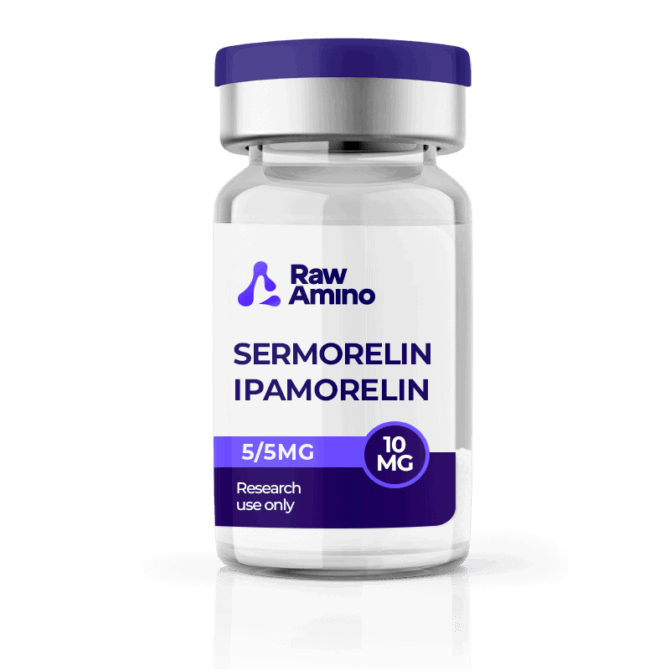
- Pre-mixed combination blends labeled as a sermorelin + ipamorelin mixture
- Compounded or pharmacy-prepared injectable options (availability varies by region and prescribing rules)
- Oral “alternatives” marketed as ipamorelin-like or GH-support products (these may not be the same compound or route—read labels closely)
Quality signals I look for before trusting any sermorelin + ipamorelin stack:
- Clear labeling (exact peptide names, strengths per vial, and how to measure dosing—no vague “proprietary blend” language for injectables)
- Batch/lot testing information such as COAs (certificate of analysis), ideally showing purity and contaminants
- Third-party verification where the supplier actually provides test results for the specific batch
- Proper sterile handling guidance (especially for reconstitution and storage instructions)
- Consistency in how the product is described across listings and documentation
If a product page can’t explain what you’re actually injecting (or it avoids COAs), that’s a red flag. “Sermorelin and Ipamorelin benefits of combination therapy” won’t matter if product quality is unclear.
Comparison of Common Options
Below is a “consumer decision” comparison. Actual dosing depends on the product’s concentration and clinician guidance, so treat this as a starting point for understanding common patterns—not a prescription.
| Format | Typical Dose/Use | Pros | Cons | Cost | Best For |
|---|---|---|---|---|---|
| Pre-mixed injectable blend (sermorelin + ipamorelin) | Often nighttime injections; strength depends on vial labeling | Simple routine; one schedule | Less flexibility if you want to adjust one component | Mid-range (varies by batch size and strength) | People who want a straightforward “sermorelin and ipamorelin combination therapy” routine |
| Separate vials (you combine yourself) | Dose timing usually staggered or matched; depends on reconstitution | More ability to fine-tune the balance | More steps; more room for measuring error | Can be lower or higher depending on suppliers | Tinker-friendly users who are meticulous with dosing and tracking |
| Compounded prescription options (where available) | Clinician-defined dosing schedule | More structured medical oversight (when prescribed) | Not always available; requires medical workflow | Often higher (depends on region and prescription) | Users who want the most “medically supervised” route |
| Oral “GH support” supplements (alternatives) | Daily capsules; ingredients vary widely | No injection; easier adherence | May not equal peptide activity or route; results can be unpredictable | Wide range | People who dislike injections and prefer non-injectable approaches |
| “Trial packs” of peptide combinations | Smaller vials for short testing windows | Lower upfront cost; quick decision-making | May not be enough time to judge side effects + lifestyle fit | Lower upfront; unit cost varies | Users doing a first pass on “sermorelin and ipamorelin benefits” without long commitment |
Buying Framework and Red Flags
If you’re shopping for sermorelin and ipamorelin combination therapy, I recommend using a checklist mindset—like a product “due diligence” routine. You’re not just buying peptides; you’re buying measurement accuracy, purity, and handling instructions.
- Red flag: No lot-specific COA or unclear purity/testing status.
- Red flag: Vague product descriptions like “proprietary GH blend” for injectables.
- Red flag: Inconsistent strengths between images, listing text, and label photos.
- Red flag: No reconstitution/storage instructions (or they’re buried and incomplete).
- Red flag: “Guarantees” (especially claims that you’ll lose fat, reverse aging, or avoid side effects).
- Green flag: Clear vial concentration/strength and straightforward dosing instructions.
- Green flag: Transparent quality processes and batch documentation.
- Green flag: Customer support that can answer label-and-dosing questions without dodging.
One more consumer note: if you’re prone to anxiety around injections, budget extra time for prep and hygiene. Many “failed experiences” are actually avoidable problems: dosing confusion, poor storage, or inconsistent bedtime routines that make it hard to interpret results.
Common Mistakes and How to Avoid Them
The biggest mistake I’ve seen in real-world discussion of sermorelin and ipamorelin benefits is treating it like a replacement for basics: sleep timing, protein intake, and resistance training. Peptides may influence signals that support recovery, but you still need the foundation.
- Mistake: Starting without baseline tracking. Fix: Record sleep quality, morning energy, and any side effects daily.
- Mistake: Changing too many variables at once. Fix: Keep workouts and nutrition stable for at least 2 weeks.
- Mistake: Guessing doses. Fix: Use precise measuring and follow label/concentration instructions exactly.
- Mistake: Ignoring early side effects. Fix: If you get headaches, mood shifts, or persistent injection irritation, stop and reassess.
- Mistake: Confusing oral “alternatives” with injectables. Fix: Read the label carefully; “oral vs injection” products may not be the same compound or route.
If you want a consumer-friendly rule: don’t judge results on day one. Also, don’t “push through” side effects. A short trial should be safe enough to learn from—if it isn’t, that’s information.
FAQ
Is sermorelin and ipamorelin combination therapy proven for women 55+? Research more strongly supports that these peptides can stimulate growth hormone signaling pathways. However, consistent, guaranteed anti-aging or body-composition outcomes in women 55+ are not proven in the way many marketing claims imply. Treat it as a personalized trial, not a certainty.
How long does it take to notice benefits from sermorelin and ipamorelin? Many people who track sleep and energy look for changes within 1–2 weeks, with clearer patterns sometimes emerging by 3–4 weeks. If you notice side effects quickly, you may learn faster than you learn “benefits.”
What side effects do women report with sermorelin and ipamorelin? Reported issues can include headaches, irritability or mood changes, changes in appetite, injection-site discomfort, and sleep disruption in some individuals. Any persistent or significant reaction is a reason to stop and speak with a qualified clinician.
Can sermorelin and ipamorelin combine with other supplements like magnesium, collagen, or B-vitamins? In many cases supplements can be combined, but “safe to combine” depends on your health conditions and the specific supplement list. If you’re on medications affecting blood sugar, blood pressure, thyroid function, or hormones, clinician input matters. Avoid stacking too many new things at once so you can attribute changes accurately.
Oral vs injection: which is better for sermorelin and ipamorelin benefits? Oral products marketed as “ipamorelin-like” or “GH support” may not deliver the same peptide activity or route as injectables, so results can differ. If your goal is the peptide-specific approach, injection-route products are what people usually mean when discussing “sermorelin and ipamorelin combination therapy”—but they also come with injection handling considerations.
A Practical 2-Week Experiment Framework
If you want to evaluate sermorelin and ipamorelin combination therapy like a consumer reviewer, you need structure. This is a safe, observational framework you can adapt with clinician guidance.
| Day(s) | What to do | What to track |
|---|---|---|
| Day 1–2 | Start with your chosen labeled approach and keep bedtime/workout routine steady. | Sleep onset time, night awakenings, morning energy (1–10), headache/mood notes. |
| Day 3–7 | Continue consistently; don’t change dose or add new supplements unless needed for safety. | Any injection-site irritation, appetite changes, stress feelings, exercise recovery. |
| Day 8–10 | Look for patterns: steadier mornings vs disrupted sleep; recovery vs fatigue. | Average sleep score, morning readiness, midday slump rating. |
| Day 11–14 | Decide whether to continue or stop based on your response and tolerance. | Net change vs baseline; side effect severity; whether benefits are noticeable enough to justify cost. |
| At any time | If side effects worsen or feel unsafe, stop and seek clinician advice. | Document what you felt and when (timing matters). |
A consumer review isn’t complete without cost reality. Many women spend for a trial pack and then decide. If your sleep is worse, mood is off, or headaches appear, stopping is a “win” because you avoided a longer-term problem. If you notice subtle improvements, you still need to weigh ongoing cost versus benefits—especially since results vary widely.
About the Author
Jordan Ellis is a health-and-supplement consumer reviewer who writes long-form guidance based on structured symptom tracking, ingredient label analysis, and pattern-based evaluation of wellness products. Over the last several years, Jordan has reviewed sleep, recovery, and body-composition support routines for women 50+ using a “2-week test window” approach and has documented both positive and negative trial experiences from community-based feedback summaries.
Disclaimer: This article is for informational purposes only and isn’t medical advice. Peptides like sermorelin and ipamorelin can affect hormone signaling, and individual safety depends on medical history and current medications. If you have endocrine conditions, a history of hormone-sensitive cancer, uncontrolled diabetes risk, or you’re pregnant/breastfeeding, talk to a qualified clinician before starting any combination therapy.
Discussion