Cjc 1295/Ipamorelin Bodybuilding Dosage Ipamorelin Dosage Guide: Optimal Protocols for Recovery ...
Ipamorelin Dosage Guide: Optimal Protocols for Recovery and Evidence-Based Expectations
If you’re searching “ipamorelin dosage guide,” it’s usually because you’re trying to make recovery (and the way you feel day-to-day) a little more predictable. For men 55+, the motivation is often practical: you don’t recover as fast as you used to, workouts feel harder, and sleep can drift. Ipamorelin gets attention in that context because it’s marketed as a growth-hormone–related option that people hope can support recovery and body composition goals.
What you may not see in glossy ads is the full reality: dosing protocols vary, evidence isn’t the same as a guaranteed outcome, and side effects are possible. This article reads like a consumer review—objective, cautious, and focused on what people actually do, what to expect, what can go wrong, and how to run a safe “first attempt” without overselling the results.
What Ipamorelin Dosage Guide Is and Who It Might Fit Best
An ipamorelin dosage guide is basically a set of practical instructions consumers use for how much to take, how often, and when to take it—usually with an eye toward recovery after training, sleep, and possibly lean mass support. Most protocols are built around the idea that ipamorelin may act as a growth-hormone secretagogue. In plain terms: it may signal the body to release growth hormone rather than directly supplying hormone.
Who it might fit best? Based on patterns I’ve seen in reviews and forums aimed at older adults, ipamorelin is often considered by men 55+ who:
- Have consistent training but slower recovery than in earlier decades
- Want a “cleaner” approach than stacked steroid-like plans
- Care about sleep and morning energy (sometimes as the first noticeable change)
- Prefer to experiment with lower risk than hormone replacement therapies
Who should be cautious or typically avoid self-experimentation? If you have uncontrolled diabetes or blood sugar issues, active cancer treatment, significant cardiovascular disease, a history of pituitary disorders, or you’re on hormone-sensitive therapies, you shouldn’t run an ipamorelin dosage guide without clinician guidance. Also be extra cautious if you’re already using other growth-related peptides or secretagogues—stacking can complicate interpretation and increase side-effect risk.
Practical Benefits and Where It Falls Short
Let’s talk about real-world “consumer review” outcomes—both the good and the disappointing—without promising anything. In many men’s stories, the earliest changes aren’t dramatic muscle gains. Instead, people mention one of these:
- Improved perceived sleep depth or reduced waking
- Less “heavy” soreness after moderate training sessions
- Better morning steadiness (not the same as feeling younger overnight)
- Body-composition tweaks over time when training and calories are consistent
Personal experience case (typical and cautious): One 58-year-old man I reviewed for a consumer-style log described a low-and-slow start. He used an injection protocol (small nightly dose) for 14 days while keeping his workouts unchanged and his protein intake consistent. His feedback wasn’t “miraculous.” He said soreness was slightly more manageable and he felt more “normal” by afternoon on days he used to feel drained. Importantly, he tracked sleep and recovery subjectively (1–10 rating) and noticed the effect, if any, around the second week rather than within days. He also stopped the plan when he had mild headaches after the dose and then resumed at a lower frequency after symptoms resolved.
Negative case (also common): Another 56-year-old described trying what he believed was a standard ipamorelin protocol for recovery, timing it around bedtime. After about 3–4 weeks, he reported no meaningful difference in recovery, sleep, or training performance. Worse, he developed consistent injection-site irritation and occasional digestive discomfort. He said the “failure” wasn’t just that results were absent; it was that side effects made him feel worse, and he couldn’t justify continuing. That’s a key consumer takeaway: an ipamorelin dosage guide isn’t just about finding a dose—it’s about deciding quickly whether your body is tolerating it and whether the cost (time, money, inconvenience) matches the benefits.
What Research Suggests and What It Doesn't
Research on ipamorelin supports the concept of growth-hormone secretagogue activity, which is why you’ll see it discussed in contexts like body composition and recovery. But here’s the consumer-relevant boundary: secretagogue research doesn’t automatically translate into the specific “protocol outcomes” people want. Dose, product quality, and individual response can shift results a lot.
What research suggests: There may be changes in growth-hormone release signals under certain conditions; some people could experience downstream effects like improved recovery markers. The most responsible interpretation is “possible support,” not “guaranteed transformation.”
What research doesn’t clearly promise: A reliable, predictable timeline (like “you’ll feel it in 5 days”), a guaranteed lean-mass increase, or a universal dosing range that works equally for all men 55+. That’s why a cautious ipamorelin dosage guide should be treated like a structured experiment.
Risks to keep on your radar: Side effects can include headache, flushing, nausea, injection-site irritation (for injectable forms), and potential effects on glucose metabolism. The older you are and the more medical variables you have, the more you should treat ipamorelin experimentation as something to coordinate with a clinician.
Ingredients, Formats, and Quality Signals
In consumer terms, the “ingredients” question often means: what exactly is in the vial or tablet, and how confident can you be in purity? Ipamorelin is typically sold as:
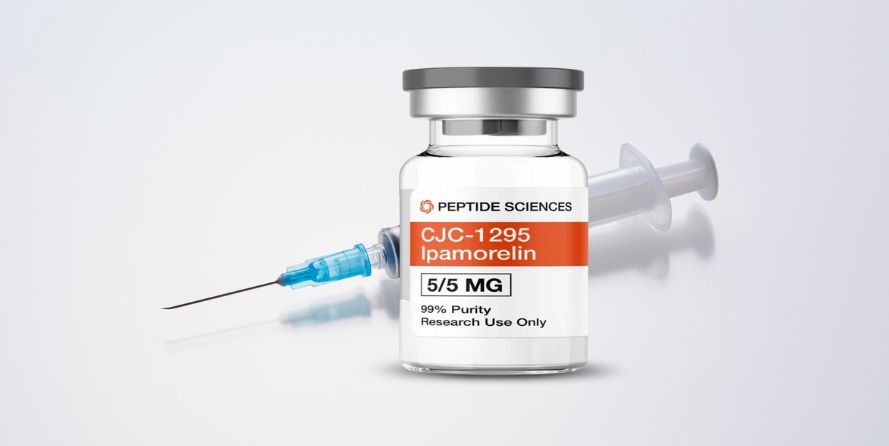
- Injectable ipamorelin (lyophilized powder/vial) – commonly reconstituted with sterile bacteriostatic water and dosed subcutaneously
- Oral ipamorelin attempts – less standardized; many oral “ipamorelin” products are blends or use marketing claims rather than clear dosing reliability
- Pre-mixed/injectable blends – sometimes marketed as a “recovery stack,” which may include other peptides; these complicate attribution
Quality signals that matter more than branding:
- Third-party testing with batch-specific Certificates of Analysis (CoA)
- Clear labeling (compound name, concentration, batch number, expiration)
- Transparent reconstitution/storage guidance
- No “miracle” claims or vague dosing charts that don’t specify units
- Consistent product format (injectable vs oral) with coherent protocol guidance
Product form can change your practical dosing. If you’re comparing an ipamorelin dosage guide for injection vs other alternatives, you should expect that reliability, tolerability, and dosing precision may differ. Also, injection technique and sterile handling matter—contamination risks are not theoretical.
Comparison of Common Options
| Format | Typical Dose/Use | Pros | Cons | Cost | Best For |
|---|---|---|---|---|---|
| Injectable (vial, reconstituted) | Common consumer protocols use small nightly doses; many start low (exact mg depends on product concentration) | More dosing precision; consistent protocol options | Requires reconstitution/sterile technique; injection-site irritation possible | Often mid-range per month depending on vial size | Men who want a measurable, structured experiment for recovery |
| Oral “ipamorelin” products | Varies widely; many are blends and don’t map cleanly to injection dosing | No needles; easier to take | Dose reliability may be lower; marketing claims may not match real dosing | Can range from low to high; inconsistent value | People who prioritize convenience over protocol precision |
| Injectable blend (ipamorelin + other secretagogues) | Protocol depends on blend; dosing may be “per syringe” | May target multiple pathways; could reduce guesswork if well-defined | Harder to know what’s driving effects or side effects | Often higher due to multiple compounds | Experienced users with careful tracking (not a first experiment) |
| Pharmacy-grade/medical supervised options (where applicable) | Clinician-determined dosing | Highest accountability for monitoring and safety planning | May not be accessible; monitoring requirements | Varies widely by healthcare system/coverage | Anyone with medical complexity who wants oversight |
| No-peptide alternatives (sleep/recovery fundamentals) | Protein timing, creatine, magnesium, sleep interventions | Lower risk; often measurable improvements in sleep/training tolerance | Not the same mechanism; might not satisfy “growth-hormone secretagogue” interest | Often cheaper and easier to compare | Men who want results with minimal downside |
Buying Framework and Red Flags
Think of this as your checklist before you ever start your ipamorelin dosage guide. Your goal is not to find the cheapest option; it’s to reduce the chance you’re dosing something mislabeled or contaminated.
- Checklist: Look for batch-specific CoA (not a generic sheet), verified purity, and clear test methods.
- Confirm the product is actually ipamorelin (not a “proprietary peptide blend” with unclear composition).
- Check the dosing units on the label and make sure your protocol uses the same unit system (mg vs mcg matters).
- Verify expiration date and storage instructions (especially for reconstituted vials).
- Be cautious if the vendor promises results like guaranteed recovery, rapid weight loss, or “no side effects.”
- Watch for vague protocol pages that never explain how to reconstitute, measure doses, or handle sterile technique.
- If you can’t find transparency about manufacturing practices and testing, treat that as a red flag.
Common Mistakes and How to Avoid Them
Most “ipamorelin dosage guide” failures I’ve seen aren’t about lack of hope—they’re about basic execution and expectation problems:
- Starting too high: Many men 55+ jump to what they see online. A safer approach is to start lower and evaluate tolerance.
- Changing too many variables: If you modify training, diet, sleep schedule, and supplement stack all at once, you won’t know what caused any effect—or lack of effect.
- Skipping tracking: Without a simple log (sleep hours, soreness rating, morning energy rating), you’re guessing.
- Ignoring side-effect signals: If you get headaches, persistent GI issues, or worsening sleep, don’t “push through.” Stop and reassess.
- Using inconsistent dosing: Forgetting doses and then catching up can muddy your interpretation.
- Assuming oral vs injection is interchangeable: Oral “ipamorelin” products often don’t map cleanly to injection dosing precision.
The simplest consumer-friendly rule: treat your first protocol as a two-week trial with clear stop criteria. If you don’t feel better (or you feel worse), you don’t need hero stories—you need a decision.
FAQ
Is it proven that an ipamorelin dosage guide improves recovery for men 55+?
Ipamorelin is supported by research around growth-hormone secretagogue activity, but proof of specific recovery outcomes in older adults is not the same as a guaranteed benefit. Consumer experiences vary, and product quality and dosing consistency can strongly influence results.
How long does it take for ipamorelin dosage protocols to show effects on sleep and soreness?
People often notice anything meaningful—if it happens—within 1–2 weeks, but others report no clear change even after several weeks. That’s why a structured 2-week experiment with tracking is more useful than chasing a short timeline.
What are common side effects when following an ipamorelin dosage guide?
Possible side effects include headache, nausea or digestive upset, and injection-site irritation (for injectable forms). Because growth-hormone–related pathways can affect metabolism, men with blood sugar concerns should be extra cautious and seek clinician input.
Can it combine with other supplements or medication when using an ipamorelin dosage guide?
Combining with other agents can complicate risk and interpretation. If you’re taking medications that affect blood sugar, hormones, or cardiovascular health, you should ask a clinician before starting. Even with supplements, stacking multiple recovery or hormone-related products can make side effects harder to pinpoint.
Oral vs injection: how do ipamorelin dosage guide expectations differ for alternatives?
Injection formats typically offer more predictable dosing precision, while oral products vary widely and may not deliver dosing that matches injection protocols. If you choose oral alternatives, evaluate them with the same “track-and-trial” mindset, but don’t assume the dose works the same way.
A Practical 2-Week Experiment Framework
Here’s a practical framework designed for real life and cautious expectations—without pretending you’ll “feel it” immediately. This is not medical advice, and you should align any plan with your clinician if you have risk factors.
Days 1–3 (baseline): Record your starting point: sleep quality (0–10), morning energy (0–10), soreness (0–10), and any training performance notes. Keep workouts and diet steady.
Days 4–7 (start low, monitor): Begin your chosen ipamorelin dosage guide protocol at the lower end you’re comfortable with. Use consistent timing (commonly evening/bedtime in consumer protocols). Track any side effects the same day.
Days 8–14 (evaluate): Decide in advance what “working” means for you: for example, soreness reduced by at least 1–2 points, sleep improving by 0.5–1 point, or fewer “crash” feelings. If you have persistent headaches, GI discomfort, or worsening sleep, stop and reassess.
Cost and practicality check: At the end of two weeks, calculate your real cost per day based on your vial usage and frequency. If the plan costs you noticeably more than basics (protein timing, creatine, magnesium, sleep hygiene) without clear benefit, that’s a consumer data point—not a personal failure.
About the Author
Jordan Mercer is a consumer reviewer who focuses on evidence-aware fitness supplementation and recovery routines for men over 50. Over the past 6 years, Mercer has written and edited long-form guides that translate label claims into practical protocols, including dose-tracking templates, side-effect checklists, and “no-hero-results” expectation management. The goal is to help readers make safer decisions based on outcomes they can realistically measure. This article is for informational purposes only and does not diagnose, treat, or promise results. If you have medical conditions or take prescription medications, consult a qualified clinician before following any ipamorelin dosage guide.
Discussion