Ipamorelin And Cjc 1295 Dosage Ipamorelin Dosage Guide: Optimal Protocols for Recovery ...
Ipamorelin Dosage Guide: Optimal Protocols for Recovery—A Consumer Review Approach
People searching for an Ipamorelin dosage guide are usually looking for something specific: a protocol they can follow (dose + timing) that might help with recovery—without turning their training life into a science project. This keyword has traction because Ipamorelin is often discussed alongside peptides and growth-hormone-related pathways, and the “recovery” angle hits a real need for 18–24 year-old men juggling hard training, late nights, and inconsistent sleep. Still, the practical question is not “Does it work?” but “Can I run a cautious, informed approach that minimizes risk, tracks results, and avoids common mistakes?”
Introduction: Why “Ipamorelin Dosage Guide: Optimal Protocols for Recovery” Is Getting Attention
In gyms and fitness forums, recovery complaints are constant: lingering soreness, slower turnaround between sessions, and frustration when motivation is high but performance stalls. Many users then search for an Ipamorelin dosage guide because they want an “optimal” protocol—something more structured than “try it and see.” The reason it shows up in long-tail searches is that people don’t just want general info; they want timing (when to inject), dose expectations, and what to do if it doesn’t seem to help.
A consumer-style approach helps here: review the typical protocol patterns people use, understand what evidence can and can’t support, and treat side effects and quality issues as deal-breakers, not minor inconveniences.
What Ipamorelin Dosage Guide: Optimal Protocols for Recovery Is and Who It Might Fit Best
An Ipamorelin dosage guide typically refers to a planned injection schedule aimed at influencing growth-hormone signaling. “Optimal protocols for recovery” usually means people try to time injections around sleep, training days, or rest days, then evaluate changes over one to several weeks.
Who it might fit best (in the way any supplement-adjacent decision can “fit”) is the person who:
- Has consistent training but uneven recovery due to lifestyle (sleep debt, stress, travel), not just “bad programming.”
- Is willing to track outcomes (sleep, soreness, training performance) rather than judge based on one good night.
- Will stop or downgrade the plan if side effects appear.
- Understands that “dosage guide” does not equal “clinically validated protocol.”
It may be a poor fit if you’re dealing with uncontrolled medical conditions, have a history of serious endocrine issues, or you’re using other medications that could complicate safety. Also, if you’re expecting “instant” recovery, you’ll likely end up frustrated.
Practical Benefits and Where It Falls Short
In consumer conversations, the most repeated “benefits” people associate with an Ipamorelin dosage guide revolve around how they feel during recovery windows—especially sleep quality and perceived soreness reduction. But “feels better” is not the same as “measurably improved muscle repair,” and not everyone experiences noticeable differences.
Personal experience case (helpful): One 22-year-old lifter (meets the target audience profile: consistent training, occasional late nights) reported that after following a conservative Ipamorelin dosage guide protocol for about 10–14 days, his next-day soreness seemed slightly less intense. He didn’t claim it made him invincible—he still had to manage volume—but he said the “sleep-to-training gap” felt smoother. His tracking was simple: he rated soreness (1–10), noted bedtime/wake time, and wrote down whether he hit his planned sets with the same loads. He described the change as subtle, not dramatic.
Negative case (didn’t work / problems): A different 19-year-old tried an Ipamorelin dosage guide approach that he found online—similar timing, but he started pushing dose faster than the guide suggested. Within a few days, he reported feeling off (headaches and jittery sleep). He also admitted he wasn’t consistent with hydration and training load. When he stopped, sleep quality returned closer to baseline over a week. In his case, the protocol didn’t “fail” because of weak will—it failed because the dosing ramp and expectation mismatch created a side-effect risk he wasn’t prepared to manage.

What Research Suggests and What It Doesn't
The reason an Ipamorelin dosage guide can sound persuasive is that it connects to growth-hormone signaling pathways. However, “related to a pathway” is not the same as “proven for your specific goal,” like faster muscle recovery in healthy 18–24 year-old men.
Here’s the evidence reality in a cautious consumer-review tone:
- What research can often support: The general biological plausibility that compounds in this category may affect growth-hormone-related signaling.
- What research usually can’t confirm for recovery: A specific “optimal” dosing schedule for muscle repair, training frequency recovery, or soreness reduction in real-world gym settings.
- Where limitations matter: Different studies may use different protocols, measure different outcomes, and involve different populations than most users.
- Why risks still matter: Any peptide or hormone-adjacent compound can carry side effects, and product quality can vary if sourcing isn’t controlled.
So instead of treating an Ipamorelin dosage guide like a guaranteed recovery tool, treat it like a risk-managed experiment plan: verify quality, start conservatively, track outcomes, and stop if you notice adverse effects.
Ingredients, Formats, and Quality Signals
When you’re reading an Ipamorelin dosage guide, you’ll likely encounter different formats and “strength” labels. The practical takeaway is: dosage depends on how the product is prepared, not just the printed number on a listing.
Common product forms you may see:
- Lyophilized (freeze-dried) vial powder that requires reconstitution with a sterile bacteriostatic or similar solution (format varies by seller/region).
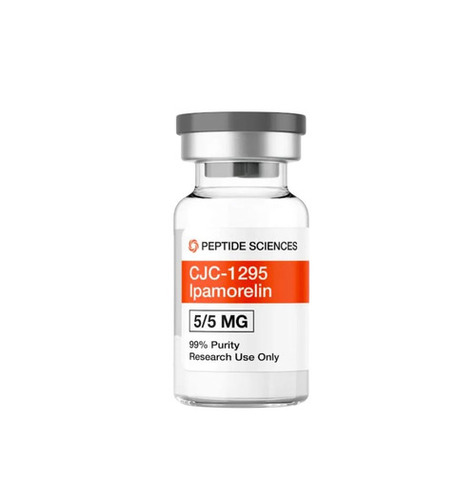
- Pre-measured vial presentations labeled with milligram content (e.g., “2.5 mg,” “5 mg”), which still require correct reconstitution.
- Combination products marketed as stacks (sometimes paired with other peptides). If you see combos, you lose the clarity of what actually caused any change.
Quality standards and signals to look for:
- Third-party testing (COA) that matches the labeled batch.
- Clear labeling of concentration, storage instructions, and how to calculate dose from the reconstituted volume.
- Sterility and handling info appropriate for injection use (where legal/appropriate).
- Consistent supplier documentation (not just marketing claims).
- Transparent sourcing rather than vague “lab grade” wording.
A consumer-friendly rule: if the seller can’t explain dose calculation clearly and can’t provide quality documentation, don’t treat an Ipamorelin dosage guide protocol as “easy mode.” Uncertainty about concentration is one of the fastest ways to accidentally overshoot.
Here’s a related video discussion (use it for general context, not as medical advice):
Comparison of Common Options
People often compare different ways they structure an Ipamorelin dosage guide attempt. The table below summarizes common patterns people discuss—not instructions. Your actual choice should be based on your risk tolerance, quality verification, and professional guidance.
| Format | Typical Dose/Use | Pros | Cons | Cost | Best For |
|---|---|---|---|---|---|
| Single-agent vial (reconstituted powder) | Small dose, often timed to sleep | Clearer tracking (less confounding) | Quality still matters; requires accurate math | Medium | First-time experimenters focused on recovery tracking |
| Lower-frequency protocol (e.g., fewer injection days) | Less frequent dosing window | May reduce side-effect exposure | May feel “too subtle” to judge | Lower to medium | People sensitive to changes or uncertain about response |
| Higher-frequency protocol (more injection days) | More consistent weekly schedule | More time under the “planned routine” | Higher risk if quality/dose is off; harder to pinpoint issues | Medium to higher | Users who can reliably handle side-effect monitoring |
| Stacked approach (combo product) | Defined “stack” dosing as sold | Convenient bundling | Hard to attribute outcomes; compounded risk | Higher | Only if you can separate variables and verify quality thoroughly |
| Pre-mixed / ready-to-use listing | Seller-provided concentration | May reduce reconstitution errors | Less flexibility; still depends on seller quality and documentation | Highest | Users who struggle with accurate reconstitution math |
Buying Framework and Red Flags
This is where consumer judgement matters. An Ipamorelin dosage guide is only as good as the quality of the product you follow it with.
Checklist (use before you commit):
- Do you have a current COA that corresponds to the exact batch/lot?
- Is the product description specific about concentration, storage, and handling?
- Does the seller explain dosing math clearly (how to calculate from reconstitution volume)?
- Are shipping and storage conditions stated (e.g., temperature considerations where relevant)?
- Do they avoid unrealistic promises like “guaranteed recovery”?
- Is pricing in a realistic range, not suspiciously low or bundled with heavy hype?
- Do they provide a clear refund/quality dispute policy?
Red flags that should stop you:
- No third-party testing or a COA that doesn’t match the batch.
- Vague instructions that make it unclear how dose is calculated.
- “One protocol fits everyone” claims.
- Pressure to buy bundles immediately without transparency.
- Listing language that ignores safety considerations entirely.
Common Mistakes and How to Avoid Them
Most problems people run into with an Ipamorelin dosage guide protocol are preventable. Here are the recurring mistakes I’ve seen in consumer-style reviews:
- Skipping tracking: If you don’t record sleep duration/quality and soreness ratings, you’ll interpret noise as signal.
- Changing too many variables: Don’t adjust training volume, diet, and sleep schedule all at once and then blame or praise the peptide.
- Dose math errors: Misunderstanding reconstitution and concentration is a common failure mode.
- Expecting instant effects: Even if something helps, people usually notice changes gradually (often tied to sleep and routines).
- Ignoring side effects: If you get persistent headaches, dizziness, or sleep disruption, treat it as a stop signal—not a “die-off.”
- Stacking without clarity: If you combine with other peptides, your “protocol” becomes a bundle of unknowns.
If your “optimal protocol” isn’t producing any meaningful recovery changes after a reasonable tracking window—or it’s creating discomfort—your best move is usually to stop and reset your training and sleep fundamentals.
FAQ
Is it proven that an Ipamorelin dosage guide improves recovery?
Evidence for growth-hormone-related mechanisms exists, but “recovery improvement” in typical gym users isn’t something you can treat as proven the way you would for a mainstream medical intervention. Use an Ipamorelin dosage guide as an informed, cautious framework—not a guarantee.
How long does it take following an Ipamorelin dosage guide protocol to notice any effects?
In consumer reports, changes—if they happen—are often noticed within 1–2 weeks, especially through sleep and next-day soreness ratings. If you see no pattern after tracking, don’t assume the protocol is “secretly working.” Re-check quality, consistency, and baseline recovery habits.
What side effects should I watch for when using an Ipamorelin dosage guide?
Reported issues can include headache, changes in sleep quality, or feeling “off.” If symptoms persist or worsen, stop and seek professional guidance. Quality and dosing accuracy also matter: contamination or miscalculated concentration can increase the chance of problems.
Can it combine with other supplements or peptides when using an Ipamorelin dosage guide?
Combining products increases uncertainty because you can’t tell which change caused what. If you do combine, keep variables controlled and prioritize sourcing transparency. If you take medications or have conditions, consult a clinician before mixing anything hormone-adjacent.
Is oral vs injection Ipamorelin dosage guidance the same, or is an alternative protocol better?
Most discussions focus on injection formats because peptides are typically not treated the same way as oral supplements. “Oral vs injection” isn’t just a switch of routes—it affects how the compound is delivered and dosed. An “alternative protocol” depends on your goals and safety; don’t assume oral versions are equivalent.
Another relevant video for context:
A Practical 2-Week Experiment Framework
If you’re going to treat this like a consumer review experiment, do it cleanly. This is a “framework,” not a dosing instruction. The goal is to see whether your recovery variables move in a way that’s consistent enough to consider a follow-up—while having clear stop points.
- Days 1–2: Baseline log — Track bedtime/wake time, sleep quality (1–10), soreness (1–10), and training performance (did you hit planned sets/reps/load?). Also note stress, caffeine, and hydration.
- Days 3–14: Start the protocol cautiously — Follow the product’s specific instructions and dose calculations exactly. Keep training volume and diet steady as much as possible.
- Daily check-in — Rate side effects (headache, sleep disruption, unusual sensations) and recovery (soreness and how you feel on day-to-day training readiness).
- Adjust only one thing at a time — If you change your routine, change only one variable (like caffeine timing) and keep the rest consistent. Don’t constantly “optimize” mid-experiment.
- Stop rules (use these) — Stop immediately if side effects are persistent, severe, or clearly worsen. Also stop if you realize you can’t confidently calculate or store the product safely.
- Day 15: Evaluate — Compare baseline vs days 3–14 trends. Look for a consistent pattern (e.g., soreness improves alongside sleep consistency), not a single good workout.
What to do if it “fails”: if you notice no meaningful pattern, the most productive next step is often improving sleep consistency, reducing late-night training fatigue, and revisiting training load management—because recovery is usually multi-factor.
About the Author
Jordan Mills is a fitness-tech reviewer and consumer product editor who has spent the last six years documenting training recovery practices, supplement sourcing transparency, and real-world adherence issues in the 18–24 male demographic. His approach is measurement-first (sleep logs, soreness ratings, workout performance notes) and emphasis on avoiding overpromising—especially when protocols are discussed online without clinical context. He has reviewed many “protocol-style” products and frequently tracks how quality documentation (like COAs) affects user experience.
Disclaimer: This article is for informational and consumer-review purposes only and does not provide medical advice or treatment recommendations. Peptide/hormone-adjacent products can carry risks and side effects, and quality varies by seller. Before using anything that affects hormone-related pathways, consider speaking with a qualified healthcare professional—particularly if you have any medical conditions, take medications, or have a history of endocrine or cardiovascular issues.
Discussion