Cjc No Dac Ipamorelin What does CJc no DAC Ipamorelin do?
What Does CJc no DAC Ipamorelin Do? A Cautious Consumer Review Guide
CJc no DAC ipamorelin sits in a niche of peptide research that many 25–34-year-old men get curious about when they’re trying to improve body composition, recovery, or “sleep + training” routines. The exact long-tail question—“What does CJc no DAC ipamorelin do?”—usually comes from one of two places: you’ve seen marketing claims about growth-hormone signaling, or you’ve read forum threads mentioning CJC (with no DAC) and ipamorelin together as a stack. This guide is written like a consumer review: practical, cautious, and focused on what people actually notice, where it can fail, and what risks to watch for.
The key idea people associate with this combination is that it may influence growth-hormone-releasing hormone (GHRH) pathways and also interact with pathways tied to growth-hormone signaling—often with the goal of supporting lean mass retention, recovery, and metabolic “background conditions.” But “may influence” is not the same as “works for everyone,” and it’s not the same as “clinically proven for your exact outcome.” Your body, your sleep, your training plan, and your dosing accuracy matter a lot.
Introduction: Why This Keyword Is Getting Attention
If you’re searching “what does CJc no DAC ipamorelin do,” you’re probably looking for a clear, non-hyped explanation. In the last few years, more men experimenting with peptides have focused on combinations that are easy to understand in theory: one part is associated with longer-lasting signaling (CJC analog behavior), and the other is often described as a “supportive” growth-hormone secretagogue (ipamorelin). The “no DAC” detail matters because many people assume it changes duration compared with CJC with DAC. That’s exactly why this keyword keeps showing up in searches—people want the practical difference.
In practice, a lot of people hope for measurable changes like improved training recovery, better soreness management, reduced “flatness,” or subtle body-composition shifts over weeks. Others mainly use it as an experiment alongside lifestyle upgrades—sleep timing, protein intake, and progressive overload. The catch: real results are inconsistent, side effects can happen, and quality control can make or break the experience.
What CJc no DAC ipamorelin Is and Who It Might Fit Best
CJc no DAC ipamorelin generally refers to a pairing of two peptide concepts:
- CJC (no DAC): commonly discussed as a GHRH-related analog where “DAC” (Drug Affinity Complex) is absent, which many users believe affects duration.
- Ipamorelin: commonly described as a growth-hormone releasing peptide (often compared to options like GHRP-type compounds).
Most people buying this type of stack are not doing it for a medical prescription—they’re doing it for personal experimentation. So who might fit best?
- Men 25–34 who already train consistently and want to explore recovery/sleep effects rather than chase instant “scale” wins.
- People who can follow injection routines carefully (or who are already comfortable with peptide preparation) and can track outcomes with notes.
- Users who understand they’re unlikely to get a neat “before/after” story every time—especially if sleep quality, calories, and stress aren’t in place.
It’s less ideal for you if you’re expecting a guaranteed transformation, if you have an underlying endocrine condition, or if you’re not comfortable managing uncertainty around dosing accuracy and sourcing.
Practical Benefits and Where It Falls Short
In consumer-style use, the “benefit” most men hope for is a combination of recovery and body-composition support—often framed as better workout readiness, less “drag,” and more stable energy between sessions. Some also report that their sleep feels deeper or that morning stiffness improves. Still, these are subjective experiences and not the same thing as medically confirmed changes.
Personal experience case (example of what “works” can look like)
One common scenario I’ve seen in user logs: a 29-year-old man runs a disciplined training split, keeps protein high, and improves sleep schedule first. He then adds CJc no DAC ipamorelin on a consistent nightly routine. Over about 10–14 days, he reports two noticeable shifts: (1) workouts feel slightly less punishing—less lingering soreness into the second day—and (2) he feels more “recovered” during the week rather than only after a full rest day. Importantly, he also tracks his sleep window and food consistency, and he doesn’t claim dramatic size gains in two weeks. For him, the stack acted like a “supporting variable,” not a magic lever.
Negative case (example of where it disappoints)
A different story: a 32-year-old man tries CJc no DAC ipamorelin but doesn’t standardize his preparation process, dose timing, or tracking. He also has inconsistent sleep due to rotating shifts. After 14 days, he reports no meaningful change—no better recovery, no sleep improvement, and no noticeable scale or body-fat shift. Worse, he reports feeling “off” shortly after dosing (a transient restlessness feeling), which made it harder for him to stick to the routine. In his case, the main failure wasn’t just “the peptide didn’t work”—it was a mix of inconsistent inputs, unclear dosing consistency, and an early side effect perception that reduced adherence.
The takeaway: even if the theoretical mechanism is appealing, your real outcomes can be limited by lifestyle stability, dosing precision, and tolerability. And if you don’t measure anything (sleep hours, training performance, soreness scores, photos/measurements), you may conclude it “did nothing” even when it did something subtle—or you may conclude it “worked” because you changed too many variables at once.
What Research Suggests and What It Doesn’t
Research discussions around CJc no DAC and ipamorelin typically orbit growth-hormone signaling pathways. But the consumer-level question is broader: “What does it do for me?” The honest answer is that the research base available to consumers often does not translate cleanly into guaranteed, personalized outcomes. What research can suggest (in general terms) is biological plausibility—how these peptides might interact with the body’s signaling systems.
What research may not give you is a clear dose-to-outcome map for your specific goals (fat loss, muscle gain, recovery, or sleep) under your lifestyle conditions. That’s why it’s important not to treat online testimonials as proof. In a cautious consumer frame, consider evidence as:
- Supportive, not definitive: plausible pathways, variable real-world response.
- Non-absolute: differences in purity, dosing accuracy, and baseline health can dominate results.
- Risk-relevant: even “research use” compounds can produce side effects in real users, and the risk profile depends on formulation and individual tolerance.
If you’re prone to endocrine sensitivity or have any medical conditions, you should treat this as a “discuss with a qualified clinician” situation rather than a DIY optimization project. At minimum, you should start with conservative observation and stop if something feels wrong.
Ingredients, Formats, and Quality Signals
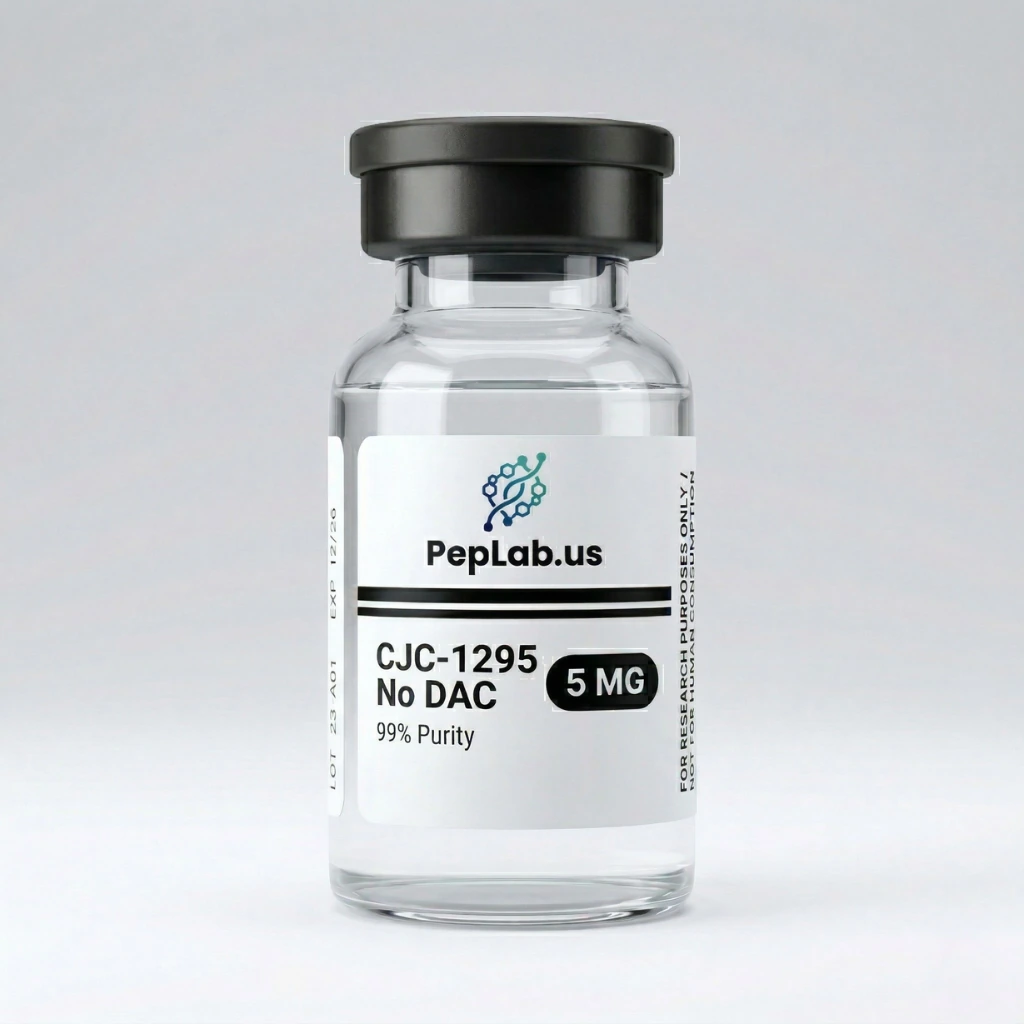
CJc no DAC ipamorelin products are typically supplied as lyophilized (freeze-dried) powder vials intended for reconstitution and injection. The format matters because it determines:
- How accurately you can dose (reconstitution volume, syringe markings, and mixing consistency).
- Stability and handling (storage temperature, light exposure, reconstitution timing).
- What “the label” actually says (ingredient listing, batch info, and any test documentation).
Common quality signals to look for in this category:
- Clear labeling: product name (including “no DAC” clarity), strength per vial (e.g., “5mg” style labeling), and instructions.
- Batch traceability: lot/batch number so you can match results or documentation to what you received.
- Third-party verification: lab testing information that covers identity and purity; vague “quality” claims are not enough.
- Packaging and storage guidance: instructions that match the product’s actual handling needs.
If a listing is vague on sourcing, batch info, or strength, it raises a red flag. In peptide experiences, quality uncertainty is one of the biggest reasons results are inconsistent.
Comparison of Common Options
| Format | Typical Dose/Use | Pros | Cons | Cost | Best For |
|---|---|---|---|---|---|
| CJc no DAC + Ipamorelin (combo) | Often nightly routine; dose varies by product labeling | Users like the “two-pathway” concept | Harder to identify which component affects side effects | Mid (depends on vial strength) | Experimenters who want a structured routine |
| Ipamorelin only | Often nightly; dose depends on vial strength | Simpler to evaluate one variable | No “combo” synergy expectation | Often lower than combos | People who want a cleaner attribution test |
| CJC with DAC (different variant) | Often longer-duration style discussions; dosing varies | Some users prefer “staying power” expectations | Not the same as “no DAC,” response can differ | Mid to higher | Users who specifically want the DAC variant experience |
| Other “GHRP-like” peptides | Varies widely by compound and product | Some people like different side-effect profiles | Mechanisms and outcomes are not identical across compounds | Varies | Comparative experimenters |
| Non-peptide alternatives (sleep/recovery-first) | Protein, creatine, sleep timing; varies | Easier to validate with routine tracking | Not the same “growth signaling” mechanism | Often lower and more transparent | People who want low uncertainty |
Cost notes: online prices fluctuate by vendor, vial strength, and shipping. In a consumer context, the most practical “cost” variable is not the headline price—it’s how many nights you get from one vial, which depends on your dosing accuracy and how long you run the experiment.
Buying Framework and Red Flags
When men ask “what does CJc no DAC ipamorelin do,” the underlying issue is often whether the product they’re buying is consistent enough for meaningful observation. Use this checklist before you commit money and time.
- Red flag: product listing doesn’t clearly specify strength (mg per vial) and reconstitution guidance.
- Red flag: no lot/batch number or no traceability.
- Red flag: purity/COA claims are vague, missing, or not verifiable.
- Red flag: “guaranteed results” language or aggressive before/after promises.
- Red flag: unrealistic dosing instructions that ignore labeling and preparation needs.
- Red flag: shipping/storage info that doesn’t match peptide handling needs.
- Green flag: you can find clear instructions, clear labeling, and consistent product naming (“no DAC” explicitly stated).
Common Mistakes and How to Avoid Them
The most common mistake is treating this as a “set it and forget it” product. If you’re using CJc no DAC ipamorelin to test recovery, you need a stable baseline—otherwise you can’t tell whether the change is from training modifications, sleep shifts, or placebo effect.
Here are mistakes that show up often:
- Inconsistent timing: switching injection times can blur sleep-related observations.
- Untracked outcomes: no sleep log, no soreness score, no photos/measurements—so you end up guessing.
- Changing everything at once: adding a new supplement stack plus diet changes plus CJc no DAC ipamorelin makes attribution impossible.
- Ignoring early side effects: pushing through restlessness, headaches, or unusual sensations can turn a short experiment into a long setback.
- Quality blind spots: if you don’t prioritize labeling and verification, your “what does CJc no DAC ipamorelin do” answer may actually be “I don’t know because the inputs weren’t consistent.”
FAQ
Is CJc no DAC ipamorelin proven to work for body composition goals?
The most cautious consumer answer is: it’s not “proven” in the way you’d expect from prescription-grade, large-scale clinical outcomes for your specific goal. Evidence discussions generally focus on biological plausibility and signaling concepts, but real-world outcomes vary, and not all studies translate to predictable results for muscle gain, fat loss, or recovery. Treat it as an experiment, not a guarantee.
How long does CJc no DAC ipamorelin take to feel effects (if any)?
Some people report subjective changes within days, but more meaningful observations in consumer logs often appear over 1–2 weeks—mainly through recovery perception, sleep quality, or training readiness. If you feel nothing and also have unstable sleep and inconsistent training, it may be the environment, not just the CJc no DAC ipamorelin stack. If side effects appear early, that’s still meaningful data.
What side effects are possible with CJc no DAC ipamorelin?
Commonly reported issues in peptide communities can include headaches, flushing sensations, tingling, changes in sleep feel (sometimes restless rather than restful), or general “off” feelings. Responses differ by person. If you notice persistent symptoms, stop and seek medical guidance. Don’t “accept” adverse effects as normal just because an online thread says so.
Can CJc no DAC ipamorelin combine with other supplements or routines?
Combination use is a common practice, but it increases uncertainty. If you combine CJc no DAC ipamorelin with multiple new supplements (or other peptides), you lose the ability to attribute effects and side effects. A consumer-friendly approach is to change one variable at a time and keep the rest of your routine stable so you can interpret what CJc no DAC ipamorelin is actually doing in your experiment.
Oral vs injection: is CJc no DAC ipamorelin only effective as an injection, or are there alternatives?
Typical CJc no DAC ipamorelin products in this category are supplied for reconstitution and injection, so “oral vs injection” comparisons aren’t always apples-to-apples. Alternatives may include different compounds, non-peptide recovery aids, or sleep-focused supplements that are easier to dose consistently. If you’re specifically weighing oral vs injection, focus on feasibility and tolerability first, not only theoretical signaling.
A Practical 2-Week Experiment Framework
Think of this as observation, not hype. Your goal is to answer the consumer-level question: what does CJc no DAC ipamorelin do for me, if anything, under stable conditions. Below is a simple framework designed for men who want structure without overpromising.
Days 1–3: Baseline + setup
- Lock sleep window as much as possible (same bedtime/wake time).
- Track: total sleep hours, morning energy (1–10), and soreness rating from the hardest workout of the week.
- Keep training and nutrition stable: don’t add a new supplement stack.
- Double-check product labeling and preparation instructions for the CJc no DAC ipamorelin format you have.
Days 4–10: Trial period with strict consistency
- Follow the same nightly timing routine (don’t “test around” with random hours).
- Track daily: sleep quality feel (not just hours), workout readiness, and any unusual symptoms.
- If you get early side effects (headache, restlessness, persistent discomfort), treat that as data—reduce risk by stopping and getting advice.
Days 11–14: Evaluate and decide
- Review notes: Did soreness trend down? Did training feel consistently better? Did sleep feel less fragmented?
- Compare to your baseline (Days 1–3). Don’t compare to someone else’s story online.
- Decide whether to continue, pause, or stop based on both subjective benefit and tolerance.
If your experiment shows no improvement and you had no side effects, you still learned something. If you had side effects, the “best result” might be stopping quickly and focusing on lower-uncertainty recovery upgrades.
About the Author
Jordan Blake is a fitness-focused writer and reviewer with experience documenting supplement and peptide-adjacent experiments for performance and recovery routines. His work emphasizes dosing clarity, tracking methodology (sleep logs, soreness ratings, training readiness), and consumer risk awareness rather than outcome hype. This article is written from a consumer-review perspective based on common user reporting patterns and practical evaluation methods. It is not medical advice, and it does not provide treatment recommendations. If you have health conditions or take medications, consult a qualified healthcare professional before using any peptide-like product, including CJc no DAC ipamorelin.
Discussion